
Enterprise Fleet Intelligence
Let your agent do the first pass before your team does.
HeliumGeek Fleet already monitors the fleet continuously and keeps enterprise teams informed through instant notifications and daily emails. This enterprise capability lets OpenClaw, Codex, Claude, or your own internal agents work directly with live fleet context to prepare prioritized morning briefs, triage prep, and recurring team-ready updates.
Built as a read-only enterprise capability, it gives your team a delegated first-pass layer: your agent can sort what changed, highlight what matters, and prepare the next summary before the team starts from scratch.
Top overnight changes
- Harbor Retail West: rewards down 28%
- Airport Lounge South: rewards down 19%
- 12 gateways dropped to zero rewards across 3 sites
- 5 of those gateways currently show critical speedtest or heartbeat issues
Ops-ready summary
- 2 gateways: speedtest critical, check ISP health and recent throughput
- 1 gateway: heartbeat stale, verify radio heartbeat continuity and site power
- Prioritize Harbor Retail West first because it accounts for most of the overnight loss
Generated from your fleet's own data
Illustrative example based on real fleet workflows. Exact outputs depend on your agent and configuration.
Another Layer Of Relief
Different jobs, one stronger ops workflow.
Instant notifications and daily emails keep teams informed without constant dashboard checking. Agents handle a different kind of work: interpreting live fleet context, prioritizing what matters, and handing your team a better starting point.
Instant notifications and daily emails
HeliumGeek Fleet pushes urgent changes into Slack, Discord, and Teams, then rolls overnight fleet activity into daily email updates so the team stays informed without having to watch the dashboard all day.
Agent-driven first pass
Agents take on the repetitive first pass after the signal arrives: interpret what changed, narrow the work queue, and prepare the brief, triage list, or report draft before the team opens the dashboard.
Read-only by design, so the workflow stays useful without pretending the agent is making decisions for you.
What It Takes Off Your Plate
Start with the repetitive work your team already does every week
The strongest agent use cases are not magic tricks. They are the first-pass tasks your team repeats every morning, every incident cycle, and every reporting window.
Morning first pass
Start the day with the brief already prepared.
Instead of opening multiple views and manually comparing dates, let your agent assemble the first read on what changed overnight and which sites deserve attention first.
Example handoff
What gateways stopped earning yesterday compared with the day before? Group the answer by site and show the biggest drops first.
Triage preparation
Narrow the queue before the team dives in.
Instead of reading through every issue and every hotspot, let your agent narrow the work queue, highlight the worst movers, and prepare the likely reasons worth checking next.
Example handoff
Show current critical issues across my fleet, list the affected gateways by site, and tell me which hotspots to inspect first.
Recurring reporting
Draft the update before anyone starts rewriting it.
Instead of rewriting the same ops, support, and leadership summaries by hand, let your agent prepare the first version from live fleet context and recurring workflow rules.
Example handoff
Send me a short morning report with the biggest reward drops, current critical issues, and the sites worth watching today.
Why Outputs Are Useful
Grounded in the way your fleet actually operates.
The agent works with the same sites, tags, wallets, gateways, rewards, live data, settled data, and current issues your team already uses in HeliumGeek Fleet, so the output stays operationally useful and ready for follow-up.
Real operational groupings
Sites
Prepare location-level summaries for venues, stores, restaurants, and deployment clusters.
Tags
Keep work queues like Needs Maintenance, Watchlist, or New Install meaningful inside the agent workflow.
Wallets
Compare portfolio performance across ownership accounts without rebuilding the context by hand.
Gateways
Drill into the specific hotspot only after the first pass narrows which devices deserve attention.
Multiple views of the same fleet
Rewards
Ground the brief in where revenue changed, by how much, and for which sites or devices.
Live Data
Spot where activity is happening now so the agent can separate active usage from stale assumptions.
Settled Data
Separate operational activity from data that has already turned into rewarded results.
Current Issues
Prepare triage from the live issue queue before the team spends time on deep inspection.
Agent Choice
Use the agent that fits your operating model
This capability is not locked to one assistant brand. The point is to let the first-pass work happen inside the tools your team already uses.
Example compatible tools shown below. Your team can also bring its own internal agents and automations.

OpenClaw
Strong fit for teams that want a durable agent, reusable skills, and a workflow that can keep showing up for daily operating tasks.

OpenAI Codex
A natural choice for technical teams already working with Codex in the app, terminal, or IDE as part of day-to-day operations.

Claude
A strong option for teams that prefer Claude-centered terminal or internal workflow setups and want the same fleet answers there.
Internal agents
Bring your own internal bot, scheduler, or reporting workflow if your team wants HeliumGeek Fleet intelligence inside existing systems.
Platform Value
Built on the same platform that already reduces manual ops work.
The agent layer matters because the platform underneath it already handles monitoring, alerts, organization, permissions, reporting, and enterprise workflows. That is what makes the output feel prepared and operational instead of generic.
- •Monitor reward performance, traffic, and current issues in one fleet platform
- •Deliver instant notifications to Slack, Discord, and Teams plus daily fleet health emails
- •Organize the fleet around sites, tags, wallets, and gateways for consistent operating context
- •Support shared team workflows with permissions, reporting, and enterprise-ready operations
Same fleet intelligence, new delegation layer
Fleet Assistant remains the in-app helper for fast answers inside HeliumGeek Fleet. Bring Your Own AI Agents extends that same intelligence to external assistants and automations that can do the repetitive first pass before the rest of the team jumps in.
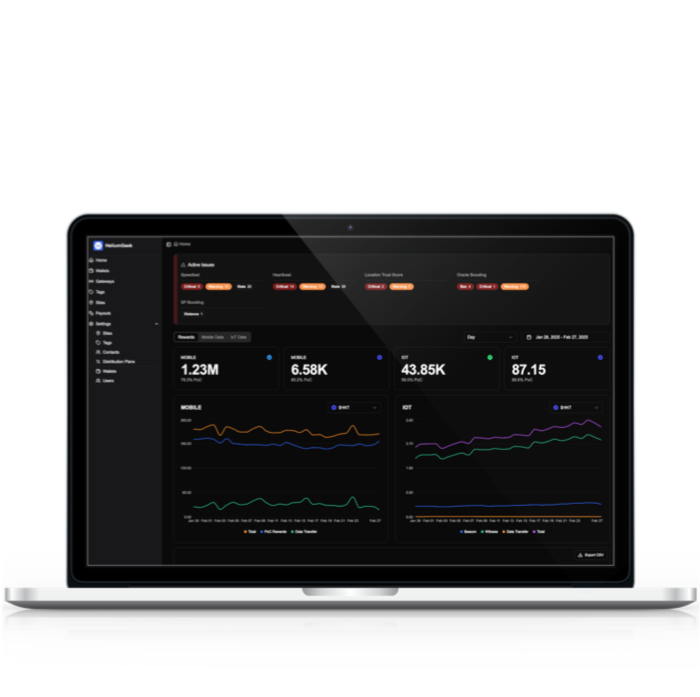
HeliumGeek Fleet
A stronger platform makes delegated work more useful.
This capability is not a disconnected AI add-on. It is built on top of the same fleet platform that already powers monitoring, organization, reporting, and enterprise operations.
Frequently Asked Questions
Common questions from enterprise teams
Clear answers about agent access, onboarding, and where this fits in the Fleet platform.
Is this the same thing as Fleet Assistant?
No. Fleet Assistant is the in-app helper inside HeliumGeek Fleet. Bring Your Own AI Agents is the external agent and automation capability for enterprise teams that want their preferred tools to work with fleet intelligence.
Which agents can we use with this?
Enterprise teams can use OpenClaw, OpenAI Codex, Claude, or their own internal agents and recurring automations.
Does this replace alerts or daily emails?
No. Alerts and daily emails keep the team informed. Agents are better suited for delegated first-pass analysis, triage prep, and recurring team-ready reporting.
What work is best delegated first?
Start with morning briefs, reward-drop checks, current issue triage, site and tag comparisons, leadership summaries, and selective hotspot diagnosis after narrowing first. These are repetitive first-pass workflows that benefit from preparation more than fully autonomous action.
Is this read-only?
Yes. This capability is designed for analysis, reporting, and investigation. It helps your team understand the fleet faster without writing back to your account.
Who is this for?
This is an Enterprise feature for HeliumGeek Fleet customers who already rely on monitoring, alerts, and reporting and want to reduce the manual first-pass work around triage, summaries, and recurring operational prep.
How do we get access?
Book a demo and HeliumGeek will walk your team through enterprise access and onboarding.
See how HeliumGeek Fleet can turn your existing agents into a delegated first-pass layer for reporting, triage, and daily ops prep.